Mastering how to generate data infographics with AI opens new horizons for data visualization, enabling users to transform complex datasets into compelling visual stories effortlessly. Leveraging artificial intelligence not only streamlines the creation process but also enhances the clarity and impact of the visuals presented. Whether you’re aiming to communicate insights across industries or enhance your website’s engagement, understanding this process unlocks powerful tools for data storytelling.
This guide explores the core components, suitable tools, data preparation techniques, and best practices for designing, customizing, and automating AI-generated infographics. By integrating these methods, users can produce visually appealing and informative graphics that resonate with their target audience and adapt seamlessly to evolving data needs.
Overview of AI-Generated Data Infographics
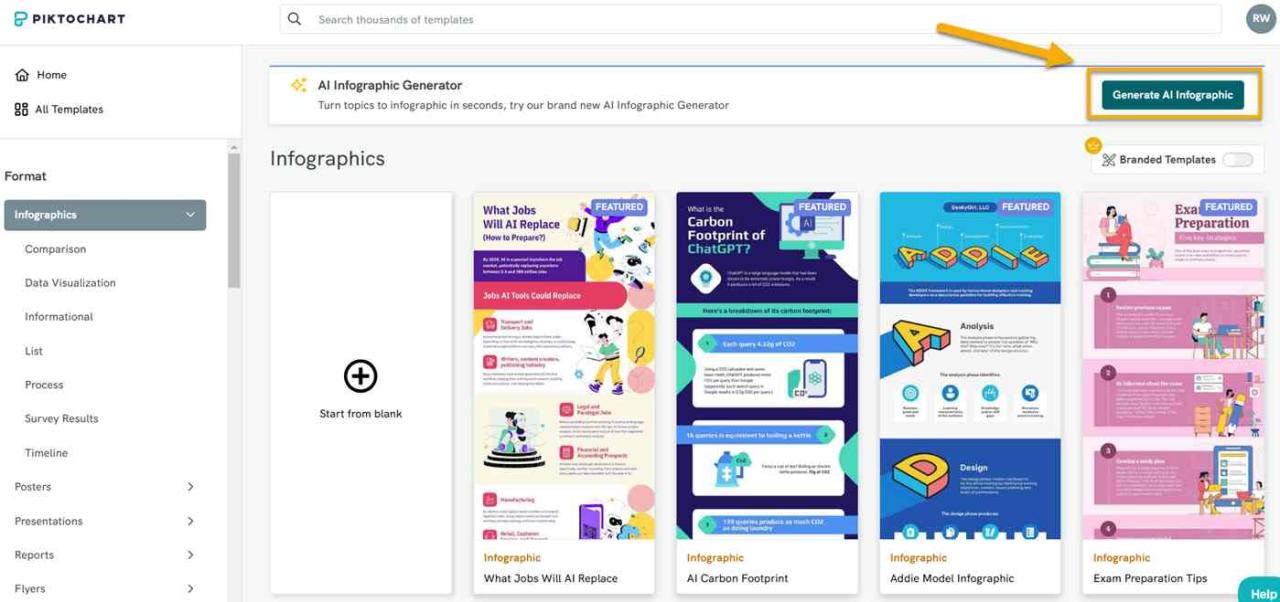
Data infographics are visual representations that transform complex datasets into easily understandable graphics, facilitating quick insights and informed decision-making. When generated using artificial intelligence, these visualizations become more dynamic, accurate, and tailored to specific analytical needs. AI-driven tools can automate the creation of compelling infographics by processing vast amounts of data efficiently, reducing manual effort, and identifying key patterns that might otherwise go unnoticed.
The integration of AI into data visualization offers numerous advantages. These include enhanced speed and scalability, as AI algorithms can analyze and visualize large datasets in real-time. Additionally, AI improves accuracy by minimizing human errors, employs advanced pattern recognition to reveal hidden insights, and enables customization that aligns with the user’s preferences or industry-specific requirements. As a result, organizations across diverse sectors—such as finance, healthcare, marketing, and technology—are increasingly leveraging AI-generated infographics to communicate complex data clearly and effectively.
Examples of Effective AI-Generated Infographics in Various Industries
Across different fields, AI-generated infographics have demonstrated their value in delivering impactful visual content that drives decision-making and strategic planning. In finance, AI tools produce real-time dashboards summarizing market trends, stock performance, and economic indicators, making data accessible to investors and analysts. Healthcare organizations utilize AI to visualize patient data, disease prevalence, and treatment outcomes, supporting medical research and public health initiatives.
In marketing, AI-driven infographics analyze consumer behavior, campaign performance, and market segmentation, enabling targeted advertising strategies. The technology also plays a significant role in environmental science, where AI visualizes climate change data, pollution levels, and resource usage, helping policymakers craft data-driven environmental policies.
These examples underscore the versatility and effectiveness of AI in creating data visualizations that are not only aesthetically engaging but also rich in insights, fostering better understanding and informed action across industries.
Core Components of AI Data Infographics

Creating compelling AI-generated data infographics requires a thoughtful combination of various core components that work together to communicate insights effectively. These elements include carefully selected data sources, cohesive visual themes, and well-structured design frameworks. Understanding and integrating these components is essential for producing infographics that are not only visually appealing but also accurate and impactful.
Each component plays a vital role in shaping the overall narrative of the infographic. Selecting relevant data ensures that the information presented is meaningful and aligned with the intended message. Visual themes guide the aesthetic consistency and emotional tone, making the data more engaging. Design structures organize the information in a logical flow, allowing viewers to grasp key insights quickly and clearly.
When these elements are seamlessly integrated, AI tools can generate infographics that elevate data storytelling and support decision-making processes effectively.
Data Sources
Identifying credible and relevant data sources forms the foundation of any successful data infographic. Reliable sources include government reports, academic research, industry databases, and reputable organizations. These sources ensure the accuracy and credibility of the insights presented. When selecting data, consider factors such as recency, scope, geographic relevance, and data granularity, which influence the infographic’s relevance and depth.
| Data Source Type | Examples | Key Considerations | Impact on Infographic |
|---|---|---|---|
| Government & Public Records | UN, World Bank, CDC | Accuracy, official status, recency | Enhances credibility and authority |
| Academic Research & Journals | Published studies, peer-reviewed articles | Methodology, data transparency | Provides in-depth insights and validation |
| Industry & Market Reports | Gartner, Statista | Relevance to target audience | Offers current market trends & comparisons |
| Internal Data | Company sales figures, analytics | Data accuracy and completeness | Custom insights tailored to specific needs |
Visual Themes
Establishing a visual theme is crucial for creating a cohesive and engaging infographic. Visual themes encompass color palettes, typography, iconography, and style consistency, which collectively influence how viewers perceive and interpret the data. A well-chosen theme aligns with the message’s tone—whether professional, innovative, or approachable—and enhances readability and aesthetic appeal.
“Consistency in visual elements helps reinforce branding and makes complex data more approachable.”
For instance, using a clean, modern color scheme with contrasting colors for key data points can draw attention effectively. Incorporating icons that match the data context—such as graphs for statistical data or lightbulb icons for insights—further supports clarity. Maintaining uniform typography and spacing throughout the infographic ensures a professional and polished appearance, facilitating better comprehension.
Design Structures
Design structures dictate how information is organized and presented within the infographic. An effective structure guides viewers through the data story logically, highlighting the most critical insights first and supporting them with detailed data as needed. This organization is achieved through layout choices, sectioning, and visual hierarchy principles.
| Component | Description | Implementation Tips | Example |
|---|---|---|---|
| Layout | Arrangement of sections and elements within the infographic | Use grid systems for alignment; balance text and visuals | Vertical flow with header, key insights, and details |
| Hierarchy | Prioritization of information to emphasize key insights | Size contrast, bold fonts, color differentiation | Highlighting a major trend with a large, bold heading |
| Sectioning | Division of content into digestible parts | Use distinct backgrounds, borders, or spacing | Breaking data into ‘Overview’, ‘Details’, and ‘Implications’ |
| Visualization Placement | Strategic positioning of charts and graphics | Align visuals with related text, maintain logical flow | Placing a pie chart next to its |
Step-by-step process for selecting relevant data involves identifying the core message, filtering out extraneous information, verifying data credibility, and ensuring data relevance to the target audience. Organizing a visual hierarchy then involves highlighting key insights through size, color, and placement, ensuring viewers grasp the most critical points immediately. Using clear structural organization and thoughtful visualization placement enhances both comprehension and engagement, making the infographic a powerful communication tool.
Selecting Appropriate AI Tools for Infographic Creation
Choosing the right AI platform for creating data infographics is a crucial step that significantly influences the quality, efficiency, and relevance of the visualizations produced. The diversity of available tools caters to various skill levels, project complexities, and specific needs. Therefore, understanding the features, compatibility, and pricing models of these AI tools helps users make informed decisions aligned with their goals and technical capabilities.
When selecting an AI tool, considerations should include the user’s familiarity with data visualization concepts, the complexity of the data to be represented, and the desired customization level. Some platforms offer user-friendly interfaces suitable for beginners, while others provide advanced functionalities for experienced data analysts and designers. Compatibility with existing data sources and integration capabilities are also vital for smooth workflow management and ensuring that data flows seamlessly into the visualization tool.
Comparison of Popular AI Platforms for Data Visualization
Below is a detailed overview of widely used AI platforms that facilitate data visualization tasks, highlighting their features, pricing models, and compatibility to assist users in selecting an appropriate tool.
| Tool | Features | Pricing | Compatibility |
|---|---|---|---|
| Tableau AI | Advanced data analysis, natural language processing, automatic insights, customizable dashboards | Subscription-based, starting at approximately $70/user/month; enterprise plans available | Supports integration with cloud services (AWS, Azure, Google Cloud), Excel, SQL databases, and APIs |
| Power BI with AI Capabilities | Built-in AI visuals, automated insights, integration with Microsoft ecosystem, predictive analytics | Free version available; Pro plan around $20/user/month; Premium plans scaled for enterprise | Compatible with Office 365, Azure, and a broad range of data sources including SQL Server, SharePoint, and Dynamics 365 |
| Google Data Studio with AI Add-ons | Real-time data visualization, collaboration features, AI-powered insights via add-ons, user-friendly interface | Free | Integrates seamlessly with Google Sheets, BigQuery, Cloud SQL, and other Google services |
| Qlik Sense with AI Integration | Associative data model, AI-driven insights, self-service visualization, collaboration tools | Subscription pricing varies; custom enterprise licenses | Supports integration with various cloud providers, databases, and APIs |
| DataRobot Data Visualization | Automated model building, AI insights, visualization tools tailored for data scientists and analysts | Enterprise licensing; pricing on request | Supports integration with major cloud platforms and data sources |
When selecting an AI platform, users should evaluate their own technical skills and the complexity of their projects. For beginners or small-scale projects, tools like Google Data Studio or Power BI offer intuitive interfaces and rapid deployment. For advanced users requiring sophisticated analysis and customization, Tableau AI or Qlik Sense may be more suitable, offering extensive features and integration options.
Enterprise-level teams might consider DataRobot or specialized solutions that support large datasets and complex workflows.
Data Preparation and Input for AI Visualization
Effective data preparation is a critical step in generating insightful and accurate AI-powered data visualizations. Properly cleaned and formatted data ensures that the AI tools interpret information correctly, leading to meaningful and visually appealing infographics. This process not only enhances the quality of visual outputs but also streamlines the overall workflow, making it easier to analyze complex datasets efficiently through AI-driven methods.Preparing data for AI visualization involves multiple stages, including cleaning, encoding, and organizing raw data into compatible formats.
These steps help mitigate errors, reduce noise, and optimize data for machine learning algorithms or AI visualization tools. Ensuring data quality at this stage is essential for producing reliable and compelling infographics that accurately represent underlying trends and insights.
Cleaning and Formatting Raw Data
Cleaning raw data involves removing inaccuracies, inconsistencies, and irrelevant information to create a reliable foundation for visualization. This process includes:
- Removing duplicate entries that can skew analysis results.
- Addressing missing values through imputation techniques or exclusion, depending on the dataset’s context.
- Correcting typographical errors and standardizing data formats, such as dates and numerical values.
- Filtering out outliers that may distort visual insights unless they are of particular interest.
- Verifying data accuracy by cross-referencing with authoritative sources or datasets.
Once cleaned, data should be formatted uniformly to facilitate seamless processing. Consistent formatting reduces potential misinterpretations by AI algorithms and promotes efficient analysis.
Encoding Data for Optimal AI Processing
Encoding transforms raw data into numerical or categorical formats suitable for AI models. Proper encoding enhances the model’s ability to interpret data accurately, especially when dealing with complex or non-numeric information. The key considerations include:
Applying appropriate encoding techniques based on data types:
- Label Encoding: Assigns unique integers to categorical variables, useful when categories have an inherent order. For example, encoding education levels such as High School, Bachelor’s, and Master’s as 1, 2, and 3 respectively.
- One-Hot Encoding: Creates binary columns for each category, suitable for nominal data without an inherent order. For instance, encoding countries into separate columns with 1s and 0s indicating presence or absence.
- Normalization and Scaling: Transforms numerical data into a standard range, such as 0 to 1, improving model convergence and comparability. For example, normalizing sales figures across multiple regions for uniform analysis.
Careful encoding ensures that AI models can recognize patterns and relationships effectively, leading to more accurate visualizations.
Organizing Datasets into Structured Formats for AI Compatibility
Structured data formats facilitate easy ingestion and processing by AI visualization tools. Organizing datasets into formats like CSV, JSON, or relational databases is essential for maintaining clarity and accessibility. This organization involves:
- Choosing an appropriate format: For tabular data, CSV files are straightforward and widely supported, whereas JSON is suitable for hierarchical or nested data structures. Relational databases may be preferred for large, complex datasets requiring querying capabilities.
- Creating clear headers and consistent column naming: Ensures that each data point is identifiable and easily mapped to visualization components.
- Ensuring data integrity and coherence: Regularly validating dataset consistency, such as matching data types across columns and avoiding missing labels, enhances reliability.
- Documenting data schema: Including metadata or documentation about data sources, variable descriptions, and units of measurement helps AI tools interpret data correctly.
Well-organized datasets streamline the process of importing data into AI visualization platforms, reducing errors and ensuring that visual outputs accurately reflect the underlying information.
Designing Effective Infographics with AI
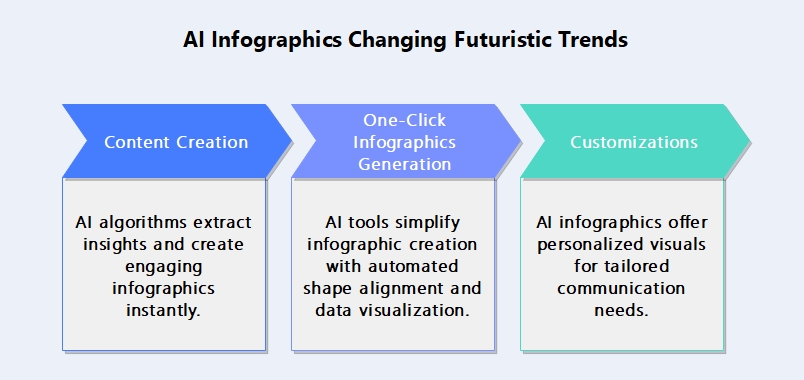
Creating compelling data infographics with AI involves more than just generating visualizations; it requires thoughtful design to communicate insights clearly and engage viewers effectively. Leveraging AI tools enables designers to automate layout decisions, optimize visual elements, and ensure data accuracy, ultimately producing professional-quality infographics efficiently.
This section explores key strategies for structuring visual layouts, integrating various chart types seamlessly, and applying color schemes and typography that enhance readability. By incorporating these principles, users can craft infographics that are not only informative but also visually appealing and easy to interpret.
Structuring Visual Layouts to Enhance Clarity and Engagement
Effective visual layout design centers around guiding the viewer’s eye naturally through the information, emphasizing key insights, and maintaining visual balance. AI-powered design tools can assist by suggesting optimal arrangements based on data relevance and visual hierarchy principles.
- Implement a clear visual hierarchy by positioning the most important data points at eye level or using size and color to draw attention.
- Group related data visually through logical placement, ensuring that similar or connected information appears close together to facilitate comprehension.
- Maintain consistent spacing and alignment to create a cohesive appearance, which AI tools can automate for precision and efficiency.
- Utilize whitespace strategically to prevent clutter, allowing viewers to focus on critical sections without feeling overwhelmed.
Integrating Various Chart Types Using HTML Table Structure
Combining different chart types within a single infographic allows for a comprehensive presentation of data, catering to diverse analytical needs. AI-driven design platforms can assist in selecting appropriate chart types and arranging them effectively within the layout.
| Chart Type | Description | Best Use Case | Example |
|---|---|---|---|
| Bar Chart | Displays categorical data with rectangular bars representing values, facilitating easy comparison. | Showing sales performance across regions or products. | |
| Pie Chart | Segments a circle into proportional slices, illustrating parts of a whole. | Visualizing market share distribution among competitors. | |
| Line Chart | Uses connected points to depict trends over time or continuous data. | Tracking website traffic growth over several months. | |
| Combination | Combines multiple chart types, such as overlaying line and bar charts, to highlight relationships. | Analyzing sales revenue alongside units sold over time. |
AI tools can recommend the optimal placement of these chart types, ensuring each visualization complements the overall narrative and maintains visual harmony within the infographic.
Applying Color Schemes and Typography for Enhanced Readability
Color schemes and typography significantly influence the ease with which viewers interpret data. Well-chosen colors can highlight important data points, while clear typography enhances overall readability. AI-based design systems can suggest color palettes and font pairings aligned with the infographic’s purpose and target audience.
- Color schemes: Use a limited palette that aligns with branding or thematic elements; employ contrasting colors to differentiate data series clearly; and apply color gradients judiciously to represent data intensity or progression.
- Typography: Select legible fonts with sufficient size for headings and body text; maintain consistency in font styles and weights to establish a clear visual hierarchy; and avoid overly decorative fonts that may hinder readability.
- Accessibility considerations: Ensure sufficient color contrast for color-blind viewers by using tools that simulate various vision impairments, and keep font styles simple to accommodate diverse audiences.
“Focus on clarity and simplicity in color and typography choices to maximize the infographic’s communicative effectiveness.”
Customizing and Personalizing Data Visuals

Tailoring AI-generated infographics to align with specific branding and communication goals enhances their effectiveness and coherence. Customization ensures that visuals resonate with the target audience and reflect the unique identity of an organization or project. Personalization allows for the integration of context-specific data, annotations, and stylistic elements, transforming generic templates into compelling and brand-consistent visuals.
In this stage, leveraging the flexibility of AI tools to adapt templates, add meaningful labels, and refine designs based on feedback is essential for creating impactful data visualizations that effectively communicate insights.
Adapting AI-Generated Templates to Branding Styles
Modifying AI-generated templates to match branding styles involves a systematic approach that integrates brand elements seamlessly into visualizations. This process helps maintain consistency across all communication channels, reinforcing brand recognition and professionalism.
- Identify core brand attributes including color schemes, fonts, logos, and style guidelines. This foundational understanding guides the customization process.
- Adjust color palettes within the AI tools to match brand colors, ensuring that visual elements are cohesive with overall branding. Many AI tools offer color scheme editors or themes that can be customized.
- Modify typography by selecting fonts that align with brand standards. AI tools often provide options to change font styles and sizes within templates.
- Incorporate logos and other visual identity elements into the infographic. Position these elements strategically to avoid clutter while maintaining visibility.
- Use style presets or templates that are designed to reflect the brand’s aesthetic, then customize specific elements as necessary.
Consistent application of branding elements within AI-generated visuals enhances brand recognition and fosters trust with the audience.
Adding Annotations, Labels, and Notes
Annotations and labels are crucial for guiding viewers through complex data narratives, clarifying key points, and highlighting significant insights within infographics. Properly integrating these elements ensures the visualization delivers its message effectively and is accessible to a broader audience.
Most AI platforms provide straightforward methods to add annotations and notes directly onto visual elements. These procedures can include:
- Selecting specific data points or chart regions where annotations are needed; then, inserting text boxes or comment layers to provide context.
- Using customizable labels to specify data categories, units, or thresholds, which help in data interpretation.
- Incorporating notes or footnotes in designated areas to provide additional background or methodological details.
- Applying visual cues such as arrows, lines, or color highlights to connect annotations with relevant data points or sections.
Effective annotations are concise, strategically placed, and styled consistently with the visual theme to ensure clarity without cluttering the infographic.
Iterating Designs Based on Feedback and Data Updates
Creating a final infographic often requires multiple iterations, especially when incorporating feedback or responding to evolving data. An adaptable workflow facilitates refinement, ensuring the visuals remain accurate and engaging.
- Gather feedback from stakeholders or target users regarding the clarity, aesthetics, and informativeness of the initial design. This feedback can be collected through reviews or focus groups.
- Identify areas that need improvement, such as confusing labels, inconsistent styling, or data inaccuracies.
- Update the underlying data inputs within the AI tools, then regenerate the infographic to reflect the latest information.
- Adjust design elements, including color schemes, layouts, or annotations, based on feedback to improve readability and visual balance.
- Repeat the review cycle as needed, ensuring each iteration enhances the overall quality and effectiveness of the infographic.
Maintaining a flexible and iterative approach maximizes the impact of data visuals, ensuring they remain relevant and accurately represent the most current insights.
Automating the Infographic Generation Process
Creating dynamic, up-to-date data visualizations is essential for organizations aiming to deliver timely insights and maintain engaging content delivery. Automating the infographic generation process leverages AI capabilities to streamline data updates, reduce manual effort, and ensure consistency across visual outputs. This approach not only enhances efficiency but also allows for scalable and real-time visualization updates, which are crucial in fast-paced data environments such as financial markets, social media analytics, or operational dashboards.By establishing workflows that incorporate data fetching, processing, and visualization, teams can enable seamless updates to their infographics.
Automation involves scripting routines that regularly pull new data from sources like APIs, databases, or data streams. These scripts then preprocess the data, feed it into AI models or visualization tools, and generate new infographic images automatically. This process minimizes human intervention, reduces error, and ensures that stakeholders always have access to the latest insights without manual redesign efforts.
Workflow Automation for Continuous Data and Visual Updates
Establishing an effective automation workflow involves integrating data collection, processing, visualization, and deployment steps into a cohesive pipeline. Once set up, this pipeline can run on scheduled intervals or trigger events based on data availability, ensuring continuous updates. Key components include:
- Data Acquisition: Automate data extraction from sources such as REST APIs, cloud databases, or IoT sensors using scripting languages like Python or specialized ETL tools.
- Data Processing: Clean, transform, and analyze raw data through automated scripts to prepare it for visualization, ensuring accuracy and relevancy.
- AI-Driven Visualization: Use AI tools capable of generating infographics based on processed data, applying templates, and styling dynamically based on predefined parameters.
- Deployment & Distribution: Automatically upload the generated infographics to web servers, content management systems, or embed directly into dashboards.
This workflow facilitates real-time updates and minimizes manual intervention, particularly useful in environments where data changes rapidly, such as stock market dashboards or social media trend analyses.
Scripting and Setting Parameters for Recurring Infographic Creation
Automation is significantly enhanced by scripting routines that handle repetitive tasks and by setting parameters that define the scope and style of each infographic. Using languages like Python in conjunction with AI visualization APIs, users can:
“Create scripts that fetch new data, process it according to specified rules, and invoke AI tools to generate visuals, all on a scheduled or event-driven basis.”
Parameters can include data filters, color schemes, visualization styles, output formats, and update frequency. For example, a script might be configured to:
- Fetch the latest sales data at midnight each day from a corporate database.
- Aggregate the data by region and product category.
- Use predefined templates with customizable color palettes to match branding.
- Generate a new infographic in PNG format and upload it to the company website automatically.
This setup ensures that each infographic reflects the most recent data without manual adjustments, saving time and reducing errors.
Embedding AI-Generated Infographics into Websites Using HTML
Integrating AI-generated infographics into websites involves embedding static images or dynamic content via HTML code snippets. After the AI tool produces the infographic, it can be stored in web-accessible directories or cloud storage, with URLs used for embedding.To embed a static infographic, use the ` ` tag within HTML:
<img src="https://yourdomain.com/path-to-infographic.png" alt="Latest Data Infographic" width="800" height="600">For dynamic or automatically updating visuals, it is effective to embed the infographic within an iframe or use JavaScript to periodically refresh the content. For example, an iframe can embed a live dashboard or an auto-updating infographic URL:
<iframe src="https://yourdomain.com/auto-updating-infographic" width="800" height="600" frameborder="0"></iframe>Additionally, if using a content management system or website builder, integrating the infographic can be achieved through custom HTML blocks, ensuring that the latest visuals are always accessible to viewers. Proper URL management and ensuring the images are optimized for web delivery are crucial for maintaining website performance and user experience.
Best Practices for Interpreting and Sharing AI-Generated Data Infographics
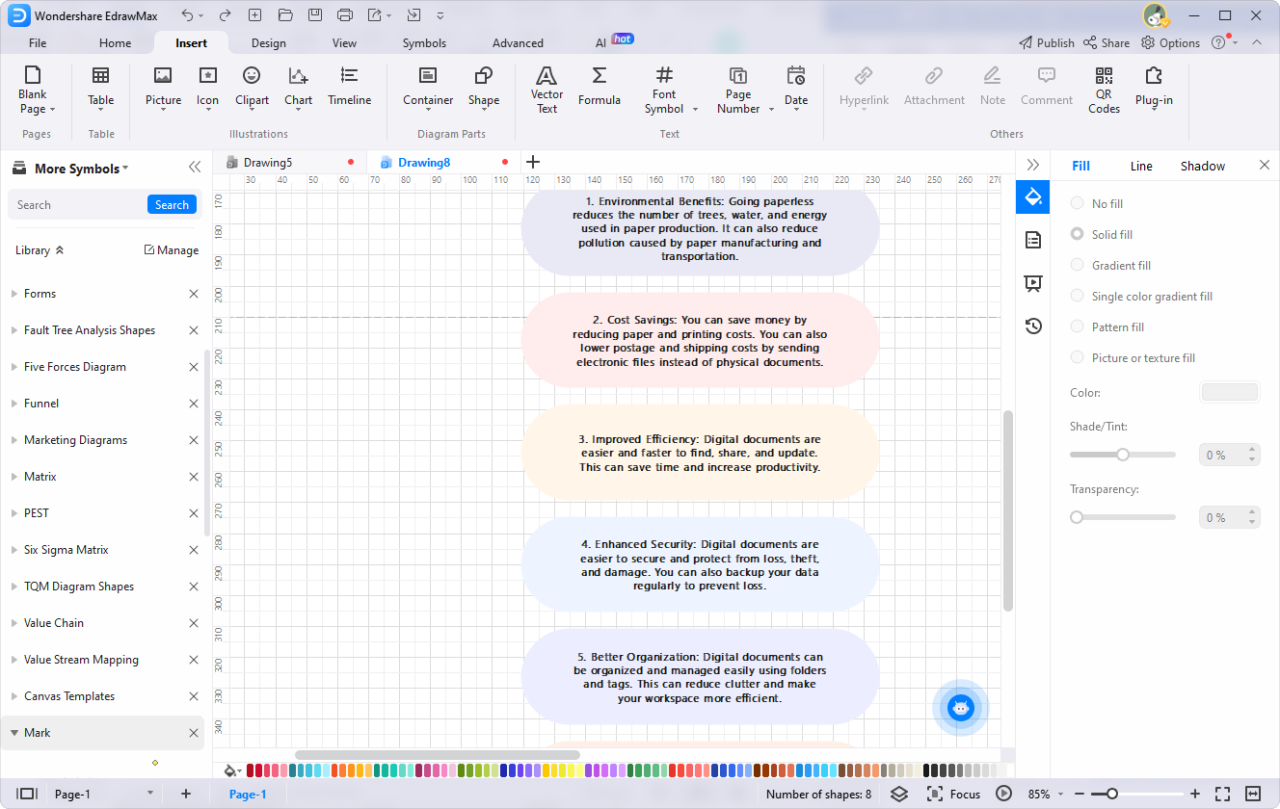
Effectively presenting AI-generated data visualizations is essential to ensure that target audiences comprehend complex information effortlessly. Proper interpretation and strategic sharing amplify the impact of data stories, fostering informed decision-making and engaging stakeholders across various platforms. Employing best practices in these areas guarantees that the insights derived from AI-driven infographics are accessible, meaningful, and actionable for diverse audiences.
Adopting structured approaches for interpretation and dissemination enhances clarity, encourages meaningful engagement, and ensures that the visualized data drives positive outcomes. It is vital to tailor presentations to the audience’s familiarity with data concepts while maintaining transparency and accuracy in communication.
Strategies for Effectively Presenting Infographics to Target Audiences
To maximize the impact of AI-generated data infographics, focus on clarity, relevance, and storytelling coherence. Use concise titles and annotations that highlight key insights without overwhelming viewers with excessive details. Incorporate narratives that connect data points to real-world implications, making complex information relatable and easier to understand.
Engage audiences by emphasizing visual hierarchy—prioritizing the most significant data through size, color, or position. Incorporate interactive elements where possible, such as tooltips or clickable sections, to allow users to explore data layers at their own pace. Present data in a logical flow to guide viewers through the insights systematically, preventing confusion and promoting comprehension.
Methods to Ensure Accessibility and Clarity in Data Storytelling
Creating accessible data infographics involves several key considerations. Use high-contrast color schemes that accommodate color vision deficiencies, and avoid relying solely on color to convey information. Incorporate descriptive labels and legends that clearly explain what each visual element represents.
Ensure text is legible with appropriate font sizes and styles, and maintain a balance between visuals and content. Consider including alternative text descriptions for digital infographics to support screen readers. Simplify complex datasets by highlighting essential trends and patterns, avoiding clutter or unnecessary decorative elements that can distract or confuse viewers.
“Clear data storytelling bridges the gap between complex data and audience understanding, turning insights into actionable knowledge.”
Distribution Channels for Sharing AI-Generated Data Infographics
Choosing the right platforms to disseminate data visualizations is crucial for reaching diverse audiences. The following distribution channels facilitate effective sharing:
- Social Media Platforms: Use LinkedIn, Twitter, Facebook, and Instagram to reach professional and general audiences. Tailor visual formats to fit platform specifications, such as square images for Instagram and long-form images for LinkedIn articles.
- Reports and Whitepapers: Integrate infographics into detailed reports or whitepapers to supplement textual analysis, making complex data more digestible for stakeholders or clients.
- Dashboards and Interactive Portals: Embed AI-generated infographics into business intelligence dashboards, allowing users to explore data dynamically and customize views according to their interests.
- Emails and Newsletters: Distribute summarized or key insights via email campaigns, including clickable images that direct recipients to detailed versions or related resources.
- Websites and Blogs: Publish visual content on organizational sites, blogs, or data portals to increase visibility and foster ongoing engagement with data narratives.
Last Word
In conclusion, learning how to generate data infographics with AI empowers individuals and organizations to communicate data more effectively and efficiently. By selecting the right tools, preparing data properly, and adhering to best design practices, you can create impactful visualizations that facilitate better understanding and decision-making. Embracing automation and customization further enhances your ability to deliver fresh and relevant insights consistently.