Understanding how to create professional pitch decks with ai opens the door to crafting compelling and impactful presentations with greater efficiency. Leveraging AI-driven tools and techniques allows creators to enhance visual appeal, streamline content generation, and refine messaging to make a lasting impression on audiences. This innovative approach combines technology and creativity, empowering entrepreneurs and professionals alike to produce polished pitch decks that stand out in competitive environments.
From selecting the right AI tools to designing visually engaging slides and optimizing persuasive messaging, this guide provides a comprehensive overview of integrating artificial intelligence into every stage of pitch deck development. Whether automating content creation or ensuring visual consistency, mastering these strategies can significantly elevate your presentation quality and effectiveness.
Understanding the Importance of Professional Pitch Decks with AI
In today’s competitive business landscape, creating a compelling and polished pitch deck is essential for capturing investor interest and effectively communicating a startup’s or project’s value proposition. Integrating artificial intelligence (AI) into this process has revolutionized how entrepreneurs and professionals craft presentations, providing innovative tools that enhance clarity, visual appeal, and persuasive power. AI-driven pitch decks not only streamline the creation process but also increase the likelihood of securing funding or strategic partnerships by delivering data-backed, visually engaging, and tailored content.
The role of AI in elevating pitch deck quality is multifaceted. It leverages advanced algorithms to analyze data, optimize content structure, and generate visuals that resonate with target audiences. For example, AI-powered tools can automatically suggest compelling storytelling arcs, improve slide layouts, and incorporate relevant infographics based on input data. This allows creators to focus more on strategic messaging while AI handles stylistic and technical enhancements, resulting in more professional and persuasive presentations.
AI-Driven Tools for Pitch Deck Creation
Numerous innovative tools harness AI to assist in developing high-quality pitch decks. These tools utilize machine learning, natural language processing, and data visualization techniques to simplify design and content creation. Some of the most influential AI tools include:
- Beautiful.ai: An AI-powered presentation tool that automates slide design, ensuring consistency, visual appeal, and effective use of space. It provides smart templates that adapt based on content, reducing the time needed for manual formatting.
- Visme: Incorporates AI features to suggest layouts, color schemes, and visual elements based on the data or message being conveyed. It also offers data visualization capabilities to craft engaging infographics.
- Canva with Magic Resize and AI Features: While primarily a graphic design platform, Canva’s AI features help quickly generate professional slides, select complementary color palettes, and suggest design improvements, making pitch deck development more accessible.
- Slidebean: Utilizes AI to automate slide content arrangement, enabling users to input core information and receive a polished, visually appealing presentation. It emphasizes storytelling and investor-focused content.
- Beautiful.AI and Presentations.ai: Platforms that analyze user input to produce optimized slide layouts, ensuring clarity and professional aesthetics without extensive design expertise.
Benefits of Integrating AI into Pitch Deck Development
Incorporating AI into the pitch deck creation process offers several significant advantages that contribute to more impactful presentations:
- Enhanced Visual Consistency and Quality: AI tools automatically align design elements, select appropriate visuals, and maintain uniformity across slides, elevating overall professionalism and making the deck more engaging.
- Time Efficiency and Productivity: Automated formatting, content suggestions, and data visualization capabilities drastically reduce the time spent on design and editing, allowing entrepreneurs to focus on refining their core message and strategy.
- Data-Driven Content Optimization: AI can analyze market trends, competitor data, and investor preferences to tailor pitch content that resonates with specific audiences, increasing the likelihood of success.
- Consistency and Error Reduction: Automating repetitive tasks minimizes human errors and maintains consistency throughout the presentation, which is crucial for maintaining credibility and clarity.
- Personalization and Adaptability: AI enables dynamic customization of decks for different investors or stakeholders by adjusting tone, emphasis, and visuals based on targeted preferences or feedback.
Integrating AI into pitch deck development transforms a traditionally manual process into a strategic, efficient, and highly effective activity that significantly enhances the chances of securing support and funding.
Essential Elements of a Professional Pitch Deck
A compelling pitch deck is a strategic tool that effectively communicates your business idea, value proposition, and growth potential to potential investors or stakeholders. Crafting a professional pitch deck requires careful selection and presentation of critical elements that highlight the strengths and viability of your venture. Leveraging AI can significantly enhance each component, ensuring clarity, accuracy, and visual appeal.
The core of a successful pitch deck lies in its ability to tell a cohesive story through well-structured slides that combine relevant content, impactful visuals, and compelling data. Each element should be optimized for clarity and engagement, with AI tools assisting in refining content, designing visuals, and analyzing data for maximum impact.
Key Slides and Content Required in a Pitch Deck
Creating a comprehensive pitch deck involves including essential slides that address the needs and interests of your audience. These slides should collectively provide an overview of your business, demonstrate its potential, and build confidence among investors. Below is a sample structure of a typical pitch deck, organized in a table for clarity:
| Slide Title | Description | Visuals | Data |
|---|---|---|---|
| Introduction / Cover Slide | Introduces the company name, logo, and tagline. Sets the tone for the presentation. | High-quality logo, compelling tagline visual, or branding imagery. | Founding year, location, and core mission statement. |
| Problem Statement | Defines the specific problem or pain point your business aims to solve, emphasizing its relevance and urgency. | Images or infographics illustrating the problem scenario or affected demographics. | Market size, statistics, or survey results highlighting the problem’s significance. |
| Solution / Product Overview | Details the product or service offering, explaining how it addresses the identified problem. | Product images, demo screenshots, or conceptual diagrams demonstrating functionality. | Customer testimonials, early adoption numbers, or case study highlights. |
| Market Opportunity | Explores the target market, segmentation, and growth potential, emphasizing the opportunity size. | Market maps, segmentation charts, or growth trend graphs. | Market research data, CAGR projections, or total addressable market (TAM) figures. |
| Business Model | Describes revenue streams, pricing strategy, and sales channels. | Flowcharts illustrating revenue flow or business process diagrams. | Financial projections, unit economics, or customer acquisition costs. |
| Traction & Milestones | Showcases progress, key achievements, and future milestones to demonstrate momentum. | Timeline graphics, growth charts, or user acquisition graphs. | Key performance indicators, user numbers, or revenue growth data. |
| Team | Profiles core team members, highlighting their expertise and roles. | Professional photos and brief bios focusing on relevant experience. | Advisors, strategic partners, or notable supporters. |
| Financial Projections | Provides forecasted income statements, cash flow, and key financial metrics for the next 3-5 years. | Graphical representations like line charts or bar graphs. | Revenue, expenses, profit margins, and funding requirements. |
| Funding & Use of Funds | Details the amount of funding sought and how it will be allocated. | Pie charts or infographics showing budget distribution. | Funding amount, valuation, and investment terms. |
| Closing / Call to Action | Summarizes the opportunity and prompts next steps or engagement. | Contact information, thank you message, or a compelling visual. | Additional data supporting the investment opportunity or strategic partnerships. |
AI can assist in optimizing each element of this structure in the following ways:
- Content Refinement: Natural language processing tools can help craft clear, concise, and persuasive narrative content for each slide, ensuring messaging is compelling and tailored to the target audience.
- Visual Design: AI-powered design platforms can suggest layouts, color schemes, and visual elements that enhance readability and aesthetic appeal, automating professional-level slide creation.
- Data Analysis and Visualization: AI analytics tools can process large datasets to generate insightful graphs, charts, and projections, ensuring data accuracy and impactful presentation.
- Market and Competitive Research: AI can gather and interpret market intelligence, providing up-to-date and relevant data to support market opportunity and competitive positioning slides.
- Demo and Prototyping: AI-driven tools can help create interactive prototypes or simulations that demonstrate products effectively within the pitch deck.
Selecting and Using AI Tools for Pitch Deck Design
Choosing the appropriate AI-powered tools is crucial for creating compelling, professional pitch decks efficiently. These tools can automate design elements, generate content, and provide data insights that enhance the overall presentation quality. Leveraging the right AI platforms allows entrepreneurs and professionals to streamline their workflow, ensure visual consistency, and craft data-driven narratives that resonate with investors or stakeholders.
Effective utilization of AI tools involves understanding the features each platform offers, evaluating their strengths and limitations, and integrating them into a cohesive creation process. This ensures that the pitch deck not only looks polished but also presents information in a clear, engaging, and persuasive manner.
Popular AI Software and Platforms for Pitch Deck Creation
Numerous AI tools are available to assist in designing professional pitch decks, each with unique capabilities tailored to different needs. Here are some of the most widely used platforms:
| AI Tool / Platform | Key Features | Advantages | Limitations |
|---|---|---|---|
| Beautiful.ai | Automated design suggestions, smart templates, real-time collaboration | Easy to use, aesthetically appealing templates, quick customization | Limited advanced customization, reliance on predefined templates |
| Canva with AI integrations | Intuitive drag-and-drop interface, AI-powered design suggestions, extensive asset library | Highly accessible, versatile templates, seamless sharing options | Some advanced features require paid subscription, less specialized for pitch decks |
| Visme | Data visualization tools, AI content generation, interactive elements | Strong data integration capabilities, engaging visuals | Steeper learning curve, premium features are paid |
| Beautiful.ai + Kami | Combining AI design with AI-generated content | Automatic content suggestions, cohesive visual and textual elements | Requires manual refinement, potential over-reliance on automation |
| Microsoft PowerPoint with AI features | Design ideas, real-time suggestions, data insights via PowerPoint Designer | Familiar interface, robust integration with Office Suite | Limited to existing PowerPoint capabilities, less specialized AI features |
Comparative Analysis of AI Tools for Pitch Deck Design
Understanding the differences between AI platforms helps in selecting the most suitable tool based on project scope, complexity, and user expertise. The comparison below highlights the key aspects of popular options:
| Criteria | Beautiful.ai | Canva | Visme | PowerPoint with AI |
|---|---|---|---|---|
| Ease of Use | High — User-friendly, minimal learning curve | High — Intuitive interface suitable for beginners | Moderate — More features require familiarity | High — Familiar for most users, integrated AI tips |
| Design Capabilities | Strong — Automated, professional templates | Versatile — Extensive assets and customization | Advanced — Data visualization and interactivity | Moderate — Based on existing PowerPoint templates |
| Content Generation | Limited — Focus on design, manual content input | Moderate — AI suggestions for text and visuals | Strong — AI-driven content and data insights | Basic — Design ideas and data insights integrated |
| Customization and Flexibility | Moderate — Prefers template adherence | High — Custom assets and layouts | High — Interactive and multimedia options | Moderate — Relies on existing templates |
| Cost | Freemium — Basic free version, premium features paid | Freemium — Basic free, advanced features paid | Freemium — Many features paid | Included in Microsoft Office, some AI features free |
Incorporating AI-Generated Content, Visuals, and Data Insights
Integrating AI outputs into your pitch deck enhances clarity, engagement, and professionalism. Here’s how to harness AI-generated elements effectively:
- Content Integration: Use AI tools like Kami to generate compelling narratives, executive summaries, and key points. Ensure the language aligns with your brand voice and is concise enough for slide presentation.
- Visual Enhancements: Leverage AI-powered design platforms such as Beautiful.ai or Canva to produce visually appealing slides. These tools offer smart templates that adapt to your content, maintaining consistency across the deck.
- Data Insights: Incorporate AI-driven data visualization tools like Visme to present complex data clearly. Use interactive charts, graphs, and infographics to make data more digestible and impactful.
- Automation and Refinement: Utilize AI features like PowerPoint’s Design Ideas to automatically generate layout options, ensuring your slides look professional without extensive manual effort.
- Quality Control: Always review AI-generated content and visuals for accuracy, relevance, and tone. Manual editing ensures your pitch deck communicates your message effectively and authentically.
By thoughtfully selecting and integrating AI tools, you can craft pitch decks that are not only visually stunning but also rich in data-driven insights and compelling narratives, thereby increasing your chances of success in securing support or investment.
Automating Content Generation with AI
Leveraging AI to automate content creation processes significantly enhances the efficiency and quality of pitch decks. Advanced AI tools can generate compelling narratives, concise executive summaries, and persuasive value propositions that resonate with stakeholders. Additionally, AI’s ability to produce data visualizations and infographics in various formats allows for clearer and more impactful communication of complex data points. Incorporating these capabilities into your pitch deck development streamlines workflows and ensures consistency across presentation materials.
By automating these elements, entrepreneurs and professionals can focus more on strategic messaging and less on manual content crafting, ultimately leading to more engaging and professional presentations that effectively communicate value and differentiation.
Generating Compelling Narratives, Executive Summaries, and Value Propositions
AI-powered natural language processing (NLP) tools can analyze vast amounts of data, market research, and company information to craft persuasive narratives that tell a cohesive story about your business. These tools can condense lengthy reports into concise executive summaries that highlight key insights and opportunities, saving time and ensuring clarity. AI can also generate targeted value propositions by identifying unique selling points and tailoring messages to specific audiences, such as investors or partners.
For instance, an AI system can analyze customer feedback, industry trends, and competitive landscapes to produce a narrative that emphasizes your startup’s innovation edge and market potential. Customizing these outputs allows users to maintain brand voice and messaging consistency, enhancing credibility and engagement.
Producing Data Visualizations and Infographics
Effective communication of data is vital for convincing stakeholders. AI tools can automatically transform raw data into visually appealing tables, charts, and infographics that succinctly illustrate key metrics and trends. These visualizations can be tailored to highlight growth trajectories, financial projections, or market segmentation details.
AI can generate pie charts to depict revenue distribution, line graphs illustrating sales growth over time, or bar charts comparing competitors’ market shares. The process involves inputting structured data into AI platforms that interpret and format the information into professional-grade visuals, eliminating the need for manual design work. This automation not only accelerates the creation process but also ensures consistency and accuracy in data representation.
Editing and Customizing AI-Generated Content
While AI-generated content provides a strong foundation, customization remains essential to align with branding, tone, and specific messaging goals. Editing processes involve reviewing the AI outputs for clarity, coherence, and relevance. It’s crucial to adjust language to match your company’s voice and ensure that key messages are emphasized appropriately.
Customizations may include modifying wording to reflect brand terminology, tweaking data labels for clarity, or redesigning infographics to match your visual identity. Many AI tools support easy editing features, allowing users to fine-tune content directly within the platform. Additionally, incorporating feedback from stakeholders ensures that the final output resonates with your target audience and maintains a professional, cohesive appearance throughout your pitch deck.
Designing Visually Engaging Slides Using AI
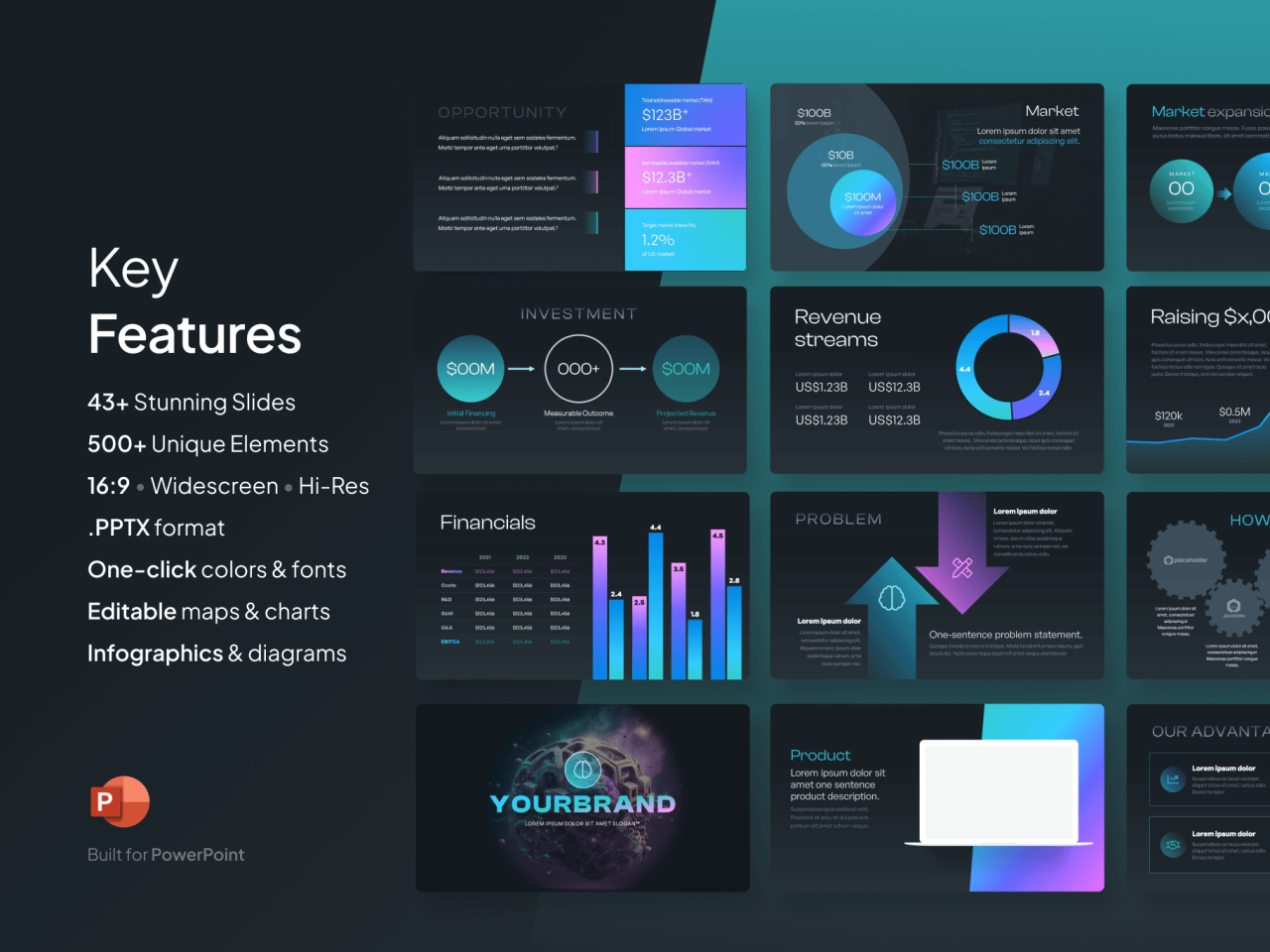
Creating visually compelling slides is essential to capture your audience’s attention and effectively communicate your message. Leveraging AI tools in the design process streamlines the development of attractive, professional-looking pitch decks that resonate with viewers. AI-assisted design recommendations can significantly enhance the aesthetic appeal and clarity of your presentations, ensuring your ideas are conveyed with impact.
Utilizing AI for visual design involves generating tailored suggestions for color schemes, layouts, and font choices, as well as selecting appropriate images, icons, and graphic elements. These tools help maintain consistency and elevate the overall quality of your pitch deck. Establishing clear guidelines for using AI-driven design features ensures your slides are cohesive, visually appealing, and aligned with your branding or thematic goals.
AI-Assisted Design Recommendations for Color Schemes, Layouts, and Fonts
AI-powered design tools analyze your content and target audience to recommend optimal color palettes that evoke the desired emotional response. For example, a startup pitching an eco-friendly product might receive suggestions emphasizing greens and earthy tones to reinforce sustainability themes. These tools can also propose layout structures that enhance readability and focus, such as placing key information prominently or balancing visual weight across slides.
Font selection is crucial for maintaining professionalism and readability. AI can suggest font pairings that complement each other, ensuring consistency across all slides. For instance, combining a clean sans-serif font for headings with a more subdued serif font for body text can foster clarity and aesthetic harmony. These recommendations often consider accessibility standards, making your pitch deck easier for diverse audiences to engage with.
Descriptive Recommendations for Images, Icons, and Graphic Elements
AI-driven design platforms excel at suggesting relevant visual elements that support your narrative. When describing your slide content, inputting key themes or concepts allows the AI to recommend suitable images, icons, and graphics. For a slide about market growth, AI might suggest upward-trending arrow icons, stock market graphs, or imagery depicting business expansion, all chosen to reinforce the message visually.
AI tools can also generate custom illustrations or adapt stock images to match your color palette and style, ensuring visual consistency. When explaining complex data points, AI can recommend infographics, charts, or schematic diagrams that simplify understanding while maintaining visual appeal. This strategic use of visuals can significantly improve engagement and comprehension during your presentation.
Guidelines for Maintaining Visual Consistency with AI Tools
Consistency in visual elements is key to creating a professional and cohesive pitch deck. AI tools facilitate this by allowing you to set predefined styles, such as color schemes, font choices, and icon sets, which are automatically applied across all slides. This reduces manual effort and helps prevent design disparities that could distract viewers.
Establishing a style guide within your AI design platform ensures that each slide adheres to your branding standards. Regularly updating and reviewing this guide helps maintain uniformity, especially when collaborating with team members. Additionally, AI can flag inconsistencies or suggest adjustments when new slides deviate from established design parameters, preserving the visual integrity of your deck.
Enhancing Persuasive Messaging with AI

Creating a compelling pitch deck requires more than just informative content; it demands persuasive messaging that resonates emotionally and motivates action. Leveraging AI capabilities enables entrepreneurs and marketers to craft impactful storytelling, identify effective persuasive patterns, and seamlessly integrate emotional appeals and clear calls-to-action. This approach ensures that presentations not only inform but also inspire and persuade investors, stakeholders, or clients effectively.
AI tools can analyze vast amounts of successful pitch examples, detect common persuasive techniques, and suggest improvements tailored to the specific audience or context. By harnessing these technologies, users can elevate their messaging strategies, creating slides that are both engaging and convincing, ultimately increasing the likelihood of achieving desired outcomes.
Techniques for Crafting Impactful Storytelling and Persuasive Language with AI
Effective storytelling forms the backbone of persuasive pitch decks. AI-driven language models can assist in developing narratives that align with the audience’s values and motivations, ensuring that key messages are delivered with clarity and emotional resonance.
- Analyzing Successful Narratives: AI can review hundreds of high-impact pitch decks to identify storytelling structures that consistently resonate. These often involve a clear problem-solution framework, customer success stories, or compelling market narratives.
- Tailoring Language for Emotional Impact: AI tools can suggest language that evokes emotions such as trust, excitement, or urgency. For example, replacing generic phrases with emotionally charged words enhances engagement.
- Optimizing for Clarity and Conciseness: AI can eliminate ambiguity and redundancy, ensuring that messages are concise yet powerful. This clarity reinforces persuasive intent and maintains audience focus.
Identifying Persuasive Patterns and Suggesting Improvements
AI algorithms excel at pattern recognition, enabling them to analyze the linguistic and structural elements of persuasive communication within pitch decks. By identifying successful patterns, AI can recommend targeted improvements to strengthen conviction and impact.
“AI-powered analysis reveals that effective pitches often employ storytelling arcs, emotional appeals, and data-driven evidence in specific sequences to maximize persuasiveness.”
These insights allow users to refine their messaging by:
- Incorporating more compelling stories aligned with audience values.
- Using data and testimonials strategically to build credibility.
- Adjusting tone and language to evoke desired emotional responses.
Integrating Emotional Appeal and Clear Calls-to-Action with AI Support
Emotional engagement and explicit calls-to-action (CTAs) are vital for motivating decision-makers. AI can assist in designing these elements to ensure they are both authentic and compelling.
- Enhancing Emotional Appeal: AI tools can suggest words, phrases, or story angles that evoke specific emotions such as hope, urgency, or confidence. For instance, emphasizing a customer success story with emotionally resonant language can foster trust and enthusiasm.
- Crafting Effective Calls-to-Action: Clear and persuasive CTAs guide the audience toward desired actions. AI can analyze existing CTAs and recommend wording that is direct, benefits-focused, and emotionally compelling.
- Testing Variations for Optimal Impact: AI-powered A/B testing features allow users to experiment with different emotional appeals and CTA formulations, providing data-driven insights on which versions perform best.
By integrating AI-supported techniques for emotional storytelling and CTA clarity, pitch decks become more than presentations—they evolve into persuasive tools that motivate audiences to act decisively. This strategic leverage of AI enhances the overall effectiveness and memorability of the pitch, significantly improving the chances of securing investment or support.
Review and Refinement of Pitch Decks via AI
Creating a compelling pitch deck is a crucial step in attracting investors and partners. However, the initial version often benefits significantly from a thorough review and refinement process. AI-powered tools enable entrepreneurs and teams to evaluate their decks systematically, ensuring clarity, coherence, and persuasive impact. This section Artikels step-by-step procedures for utilizing AI to review and critique pitch decks effectively, emphasizing methods to generate insightful feedback, identify gaps, and implement iterative improvements to elevate the overall quality of the presentation.AI review processes involve multiple stages designed to optimize content and design.
First, the pitch deck is uploaded into an AI review platform that supports natural language processing and visual analysis capabilities. The AI then conducts an initial assessment, analyzing both textual content and visual elements for consistency, clarity, and relevance. It examines the narrative flow, coherence of key messages, and logical progression of ideas, identifying areas where the storyline may be weak or disconnected.Following this, the AI generates detailed feedback by highlighting strengths and pinpointing weaknesses.
This feedback often includes suggestions for rephrasing or restructuring slides to improve persuasion, clarity, and engagement. For example, AI can identify overly technical language, complex jargon, or ambiguous statements that may confuse audience members, offering clearer alternative phrasing. Additionally, it detects missing information—such as financial projections, competitive analysis, or problem-solution links—and recommends their inclusion.The process then advances into an iterative editing phase, where users implement suggested modifications.
AI can assist in refining slide content by providing real-time editing suggestions, such as adjusting sentence structure, emphasizing critical data points, or optimizing slide layouts for better visual impact. Repeated reviews allow for continuous enhancement, ensuring each iteration aligns more closely with best practices for professional storytelling and persuasive messaging.Organizing this refinement process with AI typically involves the following steps:
- Upload and Initial Evaluation: Import the pitch deck into the AI platform for a comprehensive analysis of content and design elements.
- Feedback Generation: Receive detailed critique reports highlighting strengths, weaknesses, and actionable suggestions for improvement.
- Targeted Revisions: Make precise edits based on AI recommendations, focusing on clarity, coherence, and visual appeal.
- Iterative Review: Re-upload the revised deck for subsequent AI assessments, ensuring continuous refinement until optimal quality is achieved.
This methodical approach ensures the pitch deck evolves through constructive feedback, ultimately resulting in a polished, compelling presentation that resonates with investors and stakeholders. Employing AI in this manner accelerates the review process, reduces oversights, and elevates the overall professionalism of the final product.
Best Practices for Combining Human Creativity and AI Automation

Creating compelling pitch decks requires a harmonious blend of human ingenuity and AI-powered automation. While AI tools excel at streamlining content creation and ensuring visual consistency, the unique insights, storytelling flair, and emotional resonance of a human presenter are irreplaceable. Effectively integrating these elements results in pitch decks that are both professional and authentic, capturing the attention and trust of potential investors or clients.
This section discusses strategies to balance AI-generated outputs with personal storytelling, showcases successful human-AI collaborations, and emphasizes maintaining originality and authenticity in AI-supported presentations.
Achieving a seamless fusion of human creativity and AI automation involves deliberate strategies that leverage the strengths of both. By doing so, creators can produce pitch decks that are not only polished and data-driven but also emotionally engaging and true to the brand’s voice. Establishing clear guidelines and workflows ensures that AI acts as an enhancement rather than a replacement for human insight, resulting in presentations that resonate on both intellectual and emotional levels.
Strategies to Balance AI-Generated Content with Personal Storytelling
Maintaining a natural and authentic voice in pitch decks while utilizing AI requires deliberate planning and editing. Here are effective strategies:
- Define the narrative arc: Start by outlining the core story and key messages you want to convey. Use AI to generate supporting content, such as data summaries or slide layouts, but ensure the core narrative remains human-crafted to preserve authenticity.
- Personalize AI outputs: Customize AI-generated text and visuals to reflect your brand voice, tone, and personal insights. This could involve editing generated content to include specific anecdotes, company values, or unique perspectives.
- Embed emotional elements: Incorporate storytelling techniques that AI might overlook, such as personal experiences, customer stories, or visionary statements, to create a connection with the audience.
- Iterative refinement: Review AI-produced content critically, refining it to better align with your personal style and message. This iterative process ensures the final pitch deck authentically represents your vision.
Examples of Successful Human-AI Collaboration
Several organizations have effectively harnessed AI to enhance their pitch decks while maintaining human oversight:
- Tech Startups: A startup used AI to generate initial slide layouts and data visualizations. The founders then added personal success stories and strategic insights, transforming a generic deck into a compelling narrative that resonated with investors.
- Consulting Firms: These firms employed AI tools to automate the creation of consistent visual templates and data summaries. Consultants customized the AI outputs with client-specific stories and case studies, resulting in highly personalized and professional presentations.
- Educational Initiatives: An educational nonprofit used AI to craft engaging slides based on research data. The team infused the content with their passion for the cause through storytelling and emotional appeals, enhancing engagement and credibility.
Procedures for Maintaining Originality and Authenticity in AI-Supported Decks
Ensuring that AI-assisted pitch decks remain genuine and original involves establishing deliberate procedures:
- Set clear guidelines: Define what elements should be uniquely crafted by humans, such as storytelling, strategic insights, and brand voice, while allowing AI to handle repetitive or data-intensive tasks.
- Regular review and editing: Implement a review process where human creators scrutinize AI-generated content for originality, coherence, and authenticity before finalizing the deck.
- Incorporate personal and proprietary data: Enhance AI outputs with proprietary information, case studies, or personal experiences that cannot be replicated or generated by AI, preserving the deck’s uniqueness.
- Use AI as an idea generator: Instead of relying solely on AI for final content, treat it as a brainstorming partner that offers ideas and templates, which are then personalized and refined by humans.
- Maintain a consistent voice: Develop a brand style guide that AI tools can follow during content generation, ensuring that the tone and messaging remain aligned with your organization’s identity.
Balancing AI efficiency with human authenticity is key to creating impactful pitch decks that are both professional and genuinely representative of your message.
Closing Notes

By embracing AI technology in your pitch deck creation process, you can achieve a perfect blend of human creativity and automation, resulting in presentations that are both authentic and highly impactful. The strategies and tools discussed serve as a foundation for continuous improvement and innovation, ensuring your pitch decks captivate and persuade your audience effectively. Ultimately, leveraging AI not only streamlines your workflow but also enhances the quality and professionalism of your presentations.